
Clothing for Spring and Autumn cycling
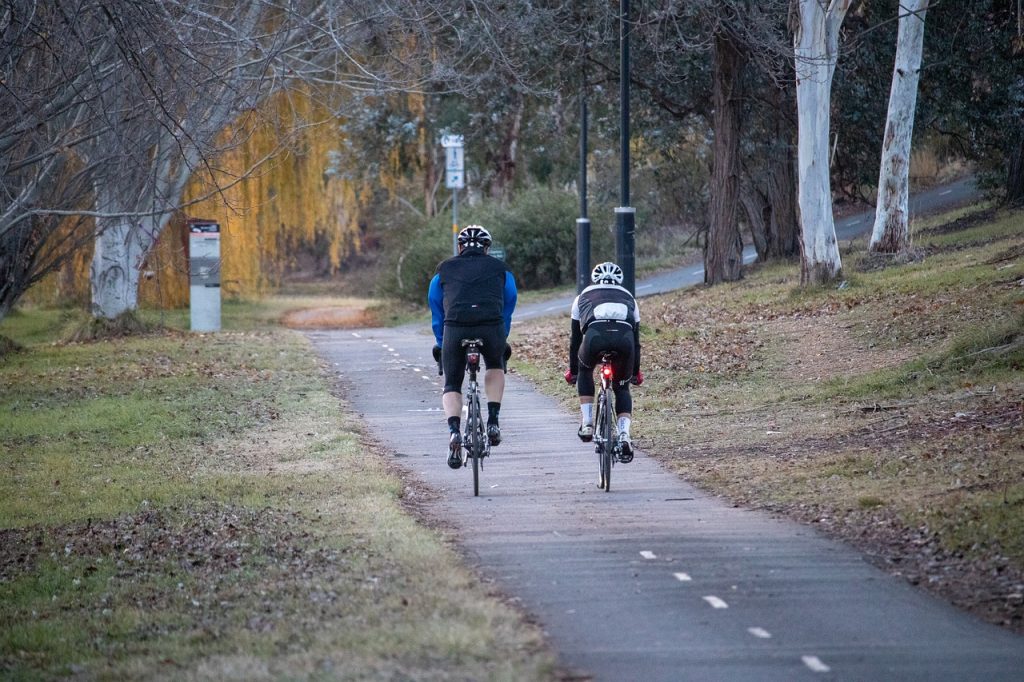
When it comes to clothing, spring and autumn cycling can be tricky to get right. It’s not uncommon to start a ride on a chilly or even frosty morning which then warms up to a beautiful sunny spring morning or afternoon and trying to find clothing to cover all bases can be a real challenge.
If the you’re struggling to get your cycling kit for spring or autumn right then our tips below may give you some good pointers.
Base layer.
The clothing you put next to your skin is probably the most important part of your kit. It will play a big part in making sure you’re comfortable for the duration of your ride. There are a number of ‘technical’ fabrics available that all claim to be the best at what they do and which one you choose will be largely a matter of personal choice. Our recommendation is the traditional Merino wool base layer as it wont cause you to become cold when it gets wet, but also won’t cause you to overheat if the temperature rises during your ride. The best sweat-wicking effect comes with a tighter fit, so get the closest fitting you can.
Jersey.
Probably the biggest question to answer with regards to your jersey is long or short sleeves. If the forecast is to stay cold for your entire ride then long sleeves may be the way to go. However, if there’s a chance that it could warm up then you might be better with a short sleeve jersey and a pair of arm warmers which you can remove if necessary. Some jerseys have a wind-proof front panel which may help to keep you warm on a chilly morning. These are fine but be careful as they can stop some much needed ventilation if it warms ups.
Arm Warmers.
Essentially these are Lycra sleeves that can be worn and then removed if the temperature rises as needed. Most are long enough to reach from wrist to mid-bicep. But so long as they go past the edge of your jersey sleeve that’s all that matters.
Outer Layer.
In spring / Autumn it’s rarely necessary to resort to a full on waterproof winter jacket. However, it’s advisable to carry a breathable, and wind resistant outer shell. If it gets a bit windy (or you’re just plain moving too fast) then such a shell will give a little more added warmth. It may also protect you from a minor shower (but isn’t going to keep you dry in a torrential downpour). You will be able to fold it up small enough to fit in a jersey pocket when not being worn. You can also roll it in to a bottle cage (just make sure it can’t come out and snag in your wheel or chainset).
Bib Shorts / Tights.
As with jerseys, the big decision is full length tights or shorts. Also, the same consideration will need to be made with regard to the weather. Tights are generally available in two types, those with a fleece (roubaix) lining and ones that are pure lycra, with the former being for colder rides. If you decide to go with shorts then they will be purely lycra but can be combined with leg warmers.
Leg Warmers.
These are the leg version of arm warmers which you can remove as you warm up. A word of warning though, only use these if stopping on your ride is feasible. Unlike arm warmers we’ve never seen anyone remove them while riding. Racing in them isn’t really an option unless you intend to leave them for the entire race.
Overshoes / Toe covers.
In spring and autumn, you’re not likely to need the full overshoe that you would use in winter. Some small toe covers may be useful for keeping the draught out of any ventilation holes that you have in your shoes.
Cap.
The last thing to mention is the cyclists all year round friend the casquette. This is essentially a very thin, usually tight fitting cotton cap similar to a baseball cap. On a chilly start it will help to keep your head warm. Take it off and stash it in a jersey pocket if it gets too hot. Alternatively, you can leave it on and it will absorb sweat to stop it running in to your eyes.
As with our articles on riding in the heat or cold, riding in the changeable months is all about preparation. Experimentation will help to find out what works for you, and perseverance will eventually pay off.
If you found this advice about clothing for spring and autumn cycling helpful please consider supporting us by buying a tea at www.buymeacoffee.com/cyclinglabs