
Why You Have Saddle Pain (and How to Fix It)

Saddle pain is something that most cyclists will encounter at some point. Anybody who’s been riding for a while will have probably heard the classic line: “You’ll get used to it.” And yes, a little discomfort is normal when you’re new to cycling or increasing your mileage. However, persistent saddle pain isn’t something you should just accept. In most cases, it’s a sign that something in your setup, technique, or equipment isn’t quite right — and the good news is that it’s usually fixable.
Below are the most common reasons your saddle still hurts, along with practical fixes you can try today. Please note, however, that these are only DIY tips that we have used ourselves to cure saddle related issues. This advice is in no way intended to replace the advice of a professional bike fit.
1. Your Saddle Doesn’t Fit Your Anatomy
Saddles aren’t one‑size‑fits‑all. Your sit‑bone width — the distance between the bony points you actually sit on — determines the saddle width you need. Knowing your sit bone width is important as it directly relates to the size of the saddle you need.
If your saddle is too narrow, your weight ends up on soft tissue. Too wide, and you get rubbing and chafing. In either scenario, your weight isn’t being properly supported.
Fix: Get your sit‑bones measured at a bike shop or use a simple at‑home method with cardboard or foil. Choose a saddle that matches your width and don’t hesitate to test a few. Many shops offer demo saddles for this exact reason.
2. Your Saddle Tilt Is Wrong
Saddle angle is critical, and even a few degrees of tilt can cause big problems. Tilt the nose up, and you’ll slide backwards, loading your lower back. Tilt it down, and you’ll be constantly pushing yourself back into place, putting pressure on your hands and wrists. Fortunately, it’s usually quite easy to diagnose this problem, as you will feel yourself sliding around.
Fix: Start with the saddle level. Use a spirit level or a phone app, then fine‑tune in 1–2 degree increments until it feels right.
3. Your Saddle Height Is Off
A saddle that’s too high causes your hips to rock side‑to‑side, which leads to rubbing, pressure points and saddle pain. Too low, and you compress soft tissue because you’re not fully supported by your sit‑bones.
Fix: Aim for a slight bend in your knee at the bottom of the pedal stroke. If you feel like you’re reaching or bouncing, it’s too high. If your knees feel cramped or you’re sitting heavily, it’s too low.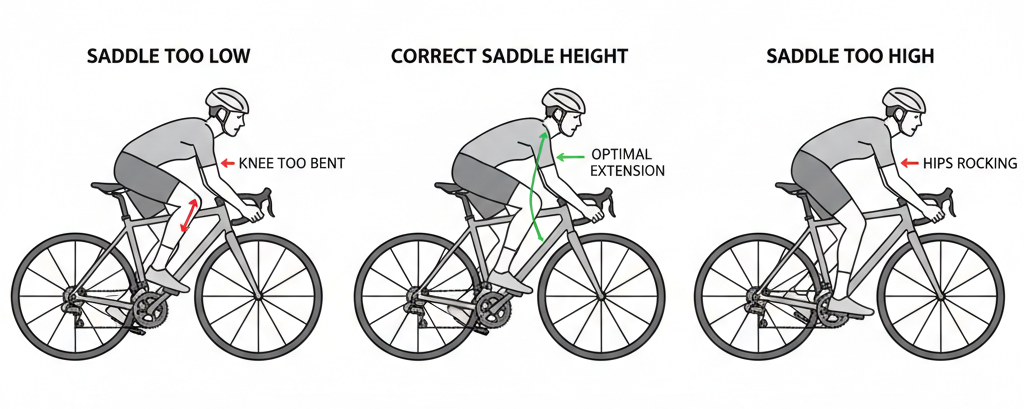
4. Your Shorts Are the Problem
 Cycling shorts aren’t optional if you want comfort. The chamois doesn’t just provide padding, it also reduces friction and wicks moisture — but only if it’s in good condition. Shorts take a fair hammering and don’t last forever, especially if you ride a lot of miles. A common beginner mistake is to wear underwear under cycling shorts. Don’t do this – the pad is designed to sit next to the skin.
Fix: Invest in a decent pair of padded shorts and never wear underwear underneath. If your shorts are more than a couple of years old or the chamois feels flat, replace them. Also consider using a good quality Chamois Cream as this will help to reduce friction from your shorts.
5. You’re Sitting in the Wrong Place
It’s very common for riders to sit too far forward on the saddle, especially when tired. This loads pressure onto soft tissue instead of the sit‑bones, which are designed to take the weight of your body in the saddle. Sitting too far back on the saddle may mean that part of the body is over the edge of the saddle and may cause chaffing in the inner thigh.
Fix: Think about your position on the saddle. Even sliding a few millimetres back or forward along the saddle can make all the difference to comfort.
6. You’re Riding Too Long, Too Soon
Even with a perfect setup, your body still needs time to adapt. Increasing your ride length too quickly irritates skin and tissue that haven’t adapted yet. Resist the temptation to jump straight in to longer rides. Build up slowly and allow all parts of your body to acclimate to longer, more strenuous rides
Fix: Increase your ride time gradually. Use chamois cream if you’re prone to rubbing or doing longer rides.
7. Your Saddle Just Isn’t Right for You
Sometimes, despite all the tweaks, a saddle simply doesn’t suit your anatomy or riding style. That’s not a failure — it’s normal. Saddles are deeply personal.
Fix: Try different shapes: flat, curved, short-nosed, and female-specific are just some of the shapes available. Keep notes on what feels better or worse. When you find the right one, you’ll know. Lady riders should investigate a female-specific saddle that is shaped and built specifically for the female form.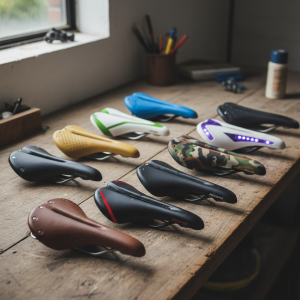
Final Thoughts on Saddle Pain
Saddle pain isn’t something you have to live with. With a bit of experimentation and a few small adjustments, most riders can eliminate discomfort entirely. Think of your saddle setup like any other part of your bike: it needs tuning, and it needs to match you. Once it does, your rides become smoother, longer, and far more enjoyable. If the DIY fixes don’t resolve the issue, a professional bike fit will. The geometry of your specific bike setup may be what’s causing the problem.