
Tyre Pressure – Getting It Right Without Overthinking
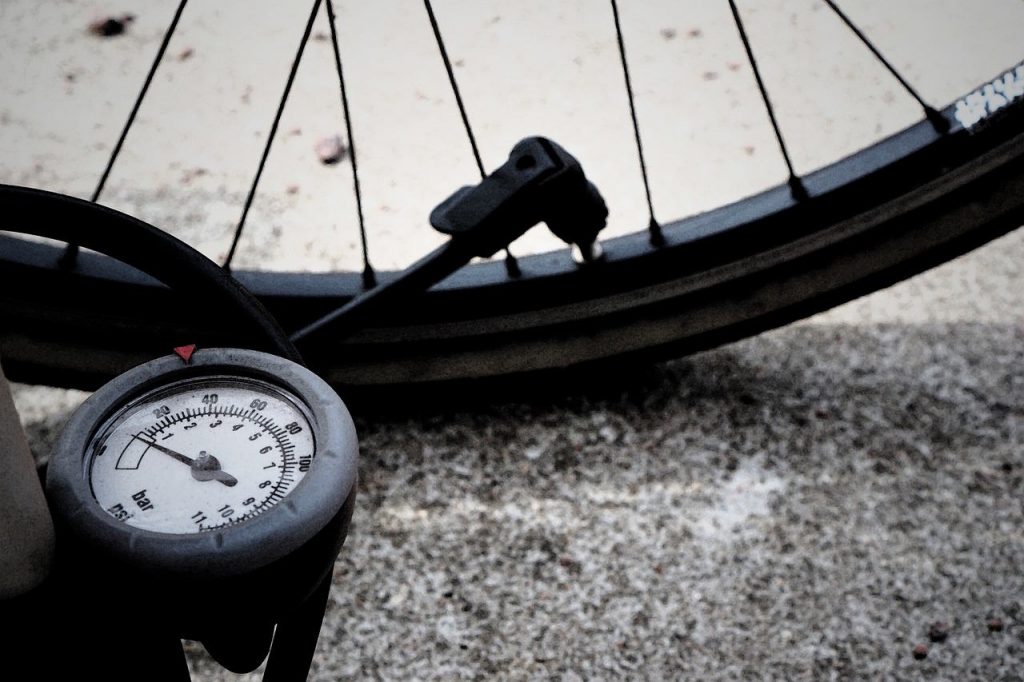
Tyre pressure is one of those subjects cyclists love to turn into a science project. Inevitably, if you ask a group of riders what pressure they run, you’ll get a mix of numbers, theories, and probably a lecture on rolling resistance. But here’s the truth: you don’t need charts, formulas, or a lab coat to get your tyre pressure right.
With a few simple principles and a willingness to experiment, you can find a pressure that feels fast, comfortable, and confidence‑inspiring — without disappearing down a rabbit hole of data. This guide strips tyre pressure back to the essentials so you can set it, ride it, tweak it, and get on with enjoying your bike.
Start With Tyre Pressure Basics: Your Weight and Tyre Size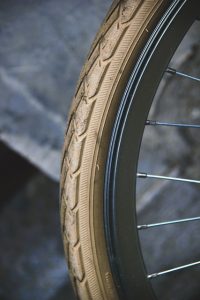
If you remember nothing else, remember this: your weight and tyre width are the two biggest factors in choosing tyre pressure.
- Heavier riders need more pressure.
- Wider tyres need less pressure.
That’s the core of it. A 90 kg rider on 28 mm tyres will naturally run more pressure than a 60 kg rider on 32 mm tyres. You don’t need exact numbers to understand the relationship — just recognise that pressure is about supporting load. The tyre is an air spring. More load requires more air.
If you want a starting point, most tyre brands publish simple charts. They’re not gospel, but they’ll get you in the right ballpark. From there, you fine‑tune based on feel.
Road Conditions Matter More Than You Think
The biggest mistake riders make is assuming that higher pressure equals more speed. That was true when everyone rode 19 mm tyres on perfect tarmac. Today’s roads — and today’s tyres — are different.
On real‑world surfaces, too much pressure can actually slow you down. A rock‑hard tyre bounces over imperfections instead of absorbing them, wasting energy and reducing grip. As a result, a slightly softer tyre smooths the ride, maintains contact with the road, and rolls faster over rough surfaces.
A simple rule of thumb:
- Smooth roads → slightly higher pressure
- Rough roads → slightly lower pressure
In reality, you don’t need to measure the texture of the asphalt; just think about the roads you ride most often. If they’re cracked, patched, or chip‑sealed, err on the softer side.
Tubeless vs. Tubes: A Useful Difference
Tubeless tyres let you run lower pressures safely because there’s no inner tube to pinch. That doesn’t mean you must go super low, but it does give you more flexibility.
- Tubeless: You can comfortably drop 5–10 psi below your usual pressure.
- Tubes: Stay a little higher to avoid pinch flats, especially if you’re a heavier rider or hit potholes regularly.
Again, no need to overthink it. Just recognise that tubeless gives you a wider safe range.
Temperature and Conditions: Adjust, Don’t Obsess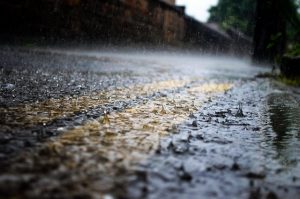
Yes, tyre pressure changes with temperature. Yes, wet roads benefit from a little extra grip. But unless you’re racing at a high level, you don’t need to calculate pressure deltas like a Formula 1 engineer.
A simple approach works:
- Cold day: Add a few psi if the tyres feel sluggish.
- Wet day: Drop 3–5 psi for better grip.
- Hot day: Don’t change anything unless the tyres feel squirmy.
Think of these as nudges, not rules.
The Feel Test: Your Most Reliable Tool
Forget the idea that tyre pressure is purely a number. It’s a feeling. And your hands, legs, and backside are better sensors than any gauge.
Here’s the simplest method to find your ideal pressure:
- Start with a sensible baseline (e.g., 70–80 psi for a 75 kg rider on 28 mm tyres).
- Ride a familiar loop.
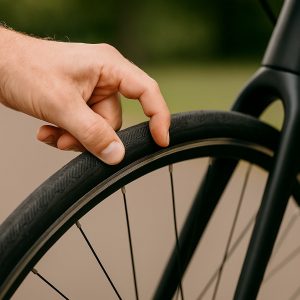
- Adjust by 3–5 psi at a time.
- Notice the difference.
You’re looking for the sweet spot where:
- The bike feels planted in corners
- The ride is smooth but not sluggish
- You’re not pinging off every crack in the road
- You finish the ride feeling fast, not battered
If you can’t tell the difference between two pressures, they’re both fine. Don’t chase perfection — chase comfort and confidence.
Common Tyre Pressure Myths You Can Ignore
Cycling is full of tyre‑pressure folklore. Here are a few myths you can safely forget:
- “Higher pressure is always faster.”
Not on real roads – it may be true on super smooth roads or a velodrome, but not on the average road. - “You must match the number printed on the sidewall.”
In fact, for safety reasons, that’s a maximum, not a recommendation. - “You need different pressures for every ride.”
Only if conditions change dramatically, i.e. Temperature, surface type, or amount of water. - “Front and rear must be the same.”
Your rear wheel carries more weight, so it usually needs a bit more pressure. - “Front and rear must be the same.”
Your rear wheel carries more weight, so it usually needs a bit more pressure.
The more myths you ignore, the simpler this becomes.
A Simple, Repeatable Formula
If you want a no‑nonsense approach you can use forever, here it is:
- Pick a starting pressure based on your weight and tyre width.
- Adjust up or down depending on road surface.
- Fine‑tune by feel over a few rides.
- Stop thinking about it.
That’s it. No spreadsheets, anxiety, or over‑analysis.
Final Thoughts
Choosing the right tyre pressure isn’t about chasing a magic number — it’s about finding a range that works for your body, your bike, and your roads. Once you’re in that range, tiny differences don’t matter. What matters is how the bike feels beneath you.
Set it, ride it, tweak it, and trust your instincts. Your tyres don’t need perfection. They just need to support you, grip the road, and let you enjoy the ride.
Check out more great tips on our advice page
If you found this article useful, please consider buying us a coffee at https://buymeacoffee.com/cyclinglabs