
Understanding Cadence: Why It Matters and How to Improve Yours
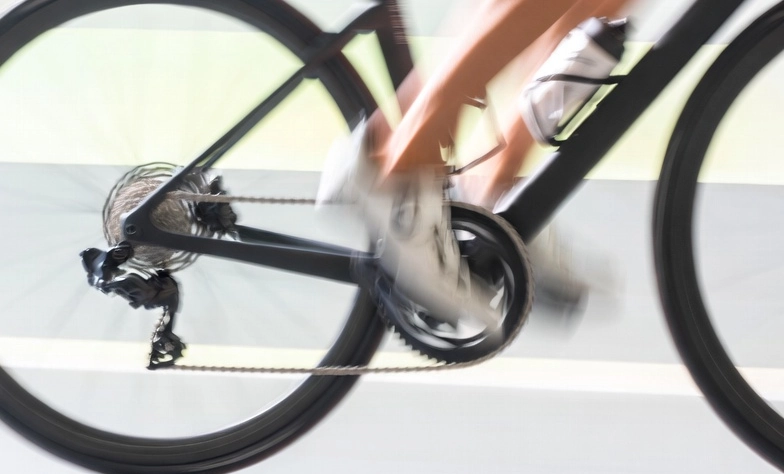
Cyclists obsess over speed, power, and heart rate — but cadence is the quiet metric that ties everything together. Whether you’re riding for fitness, tackling long endurance routes, or chasing performance gains, understanding your cadence can transform the way you ride.
Additionally, this guide breaks down what cadence is, why it matters, and how you can improve yours with simple, practical techniques.
🚴♂️ What Is Cadence?
Cadence is the number of pedal revolutions you complete per minute (RPM). Think of it as your cycling “rhythm, as a result, it plays a major part in how efficiently you ride.” A higher cadence means faster, lighter spinning; a lower cadence means slower, heavier pedalling.
Most cyclists naturally settle somewhere between 70–90 RPM, but the “right” cadence depends on your physiology, terrain, and goals.
⚙️ Why Cadence Matters
Cadence isn’t just a number — more importantly, it directly affects your efficiency, fatigue levels, and long‑term performance.
1. It Influences Muscle Fatigue
- Low cadence (50–70 RPM) loads your muscles heavily, especially the quads.
- High cadence (85–100 RPM) in contrast, shifts the load toward your cardiovascular system.
If your legs burn out before your lungs do, a higher cadence can help you ride longer with less muscular fatigue.
2. It Affects Your Power Output
Power is a combination of torque × cadence. You can produce the same power at:
- 60 RPM with high torque
- 90 RPM with lower torque
Most riders find higher cadences more sustainable over long distances.
3. It Helps You Ride More Efficiently
A smoother, more consistent cadence:
- Reduces energy spikes
- Improves pacing
- Keeps your heart rate steadier
- Helps maintain traction on climbs and loose surfaces
4. It Reduces Injury Risk
Grinding a big gear at low cadence increases stress on:
- Knees
- Hips
- Lower back
A slightly higher cadence can reduce joint strain and improve long‑term comfort.
🎯 What’s the Ideal Cadence?
There’s no universal “best” cadence, but here are useful benchmarks:
| Riding Type | Typical Cadence | Notes |
|---|---|---|
| Endurance / Zone 2 | 85–95 RPM | Efficient for long rides |
| Climbing | 70–90 RPM | Lower is fine on steep gradients |
| Sprinting | 100–120+ RPM | High cadence for explosive power |
| Indoor Training | 85–100 RPM | Controlled environment helps consistency |
Elite riders often sit around 90–100 RPM, but your ideal cadence is the one that feels smooth, sustainable, and efficient for your body.
🔧 How to Improve Your Cadence
Improving cadence isn’t about spinning wildly — it’s about developing smooth, controlled pedalling. Here’s how to build it up.
1. Start by Measuring Your Baseline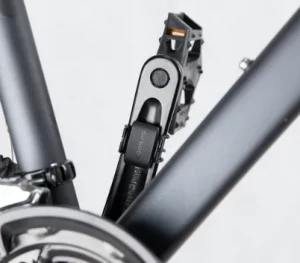
Use:
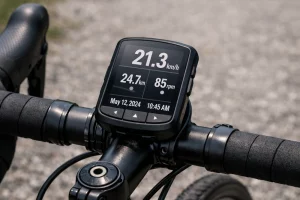
- A bike computer
- A cadence sensor
- A smart trainer
Ride normally for 20–30 minutes and note your natural cadence. This becomes your starting point.
2. Add Cadence Drills to Your Training
High‑Cadence Intervals
- 1 minute at 100–110 RPM
- 1–2 minutes easy
- Repeat 6–10 times
This trains neuromuscular coordination and smoothness.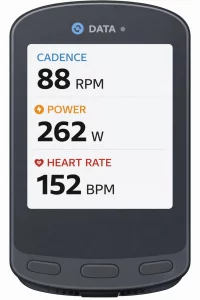
Cadence Ladders
Increase cadence by 5 RPM every minute for 5 minutes, then step back down.
Single‑Leg Drills (Indoor Only)
Clip out one foot and pedal with the other for 30–45 seconds. This exposes dead spots in your pedal stroke and improves efficiency.
3. Use Gearing More Intentionally
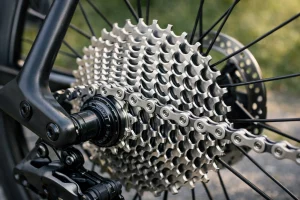
Many riders stay in too big a gear. Shift earlier and experiment with:
- One gear lighter
- 5–10 RPM higher
Small changes make a big difference in comfort and endurance.
4. Focus on Smooth Pedalling Technique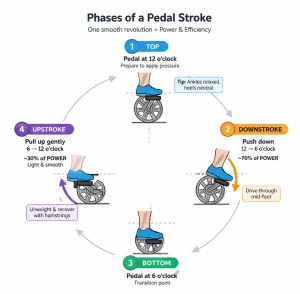
Think:
- Light feet
- Even pressure
- No “stomping”
- Smooth circles rather than squares
If your hips bounce, you’re spinning too fast — back it off slightly.
5. Build Strength Off the Bike
A stronger core and hip stability help maintain a steady cadence. Useful exercises:
- Planks
- Glute bridges
- Single‑leg squats
- Deadlifts
Strength supports efficiency, especially on climbs.
🧠 Cadence Myths to Ignore
❌ “Higher cadence is always better.”
Not true — it must be sustainable for your physiology.
❌ “Low cadence means you’re unfit.”
Some riders naturally prefer lower RPM, especially on climbs.
❌ “You should match pro cadence numbers.”
Pros train thousands of hours a year — your ideal cadence is personal.
🚴♀️ Putting It All Together
Cadence is one of the simplest metrics to track, yet one of the most powerful for improving your cycling. By understanding your natural rhythm and gradually refining it, you’ll ride more efficiently, reduce fatigue, and subsequently unlock smoother, more enjoyable miles.
For more great tips and advice visit our Index Page