
Squealing Disc Brakes – How to Fix Them
Squealing disc brakes are a sure-fire way to ruin an otherwise perfectly good ride. Whether it’s a light rub or a full‑on banshee wail, noisy brakes are more than just annoying—they’re a sign that something isn’t quite right. The good news? Most squealing can usually be fixed quickly with a bit of methodical troubleshooting.
Here’s a clear, rider‑friendly guide to diagnosing and silencing noisy disc brakes.
1. Start With the Basics: Are Your Rotors Clean?
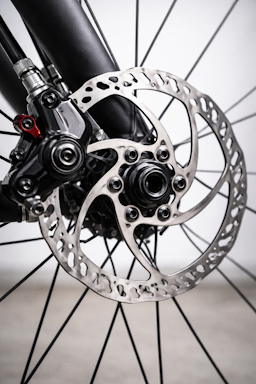
Contamination is the number one cause of disc brake noise. Even a tiny amount of chain lube, degreaser, or road grime can make pads glaze and rotors squeal.
 How to fix it
- Clean the rotors with isopropyl alcohol (IPA) and a clean lint‑free cloth.
- Avoid brake cleaners that leave residue—IPA is safest.
- If the pads are lightly contaminated, remove them and sand the surface with fine‑grit paper (120–200 grit), then clean with IPA.
- If contamination is severe, replace the pads. Once oil soaks deep into the pad material, no amount of sanding will save them.
2. Check Rotor Alignment
Another common cause of squealing disc brakes is rotor alignment. A slightly bent rotor can cause intermittent squealing or rubbing.
How to check
- Spin the wheel and watch the rotor pass through the calliper.
- If it wobbles side‑to‑side, it’s out of true.
How to fix
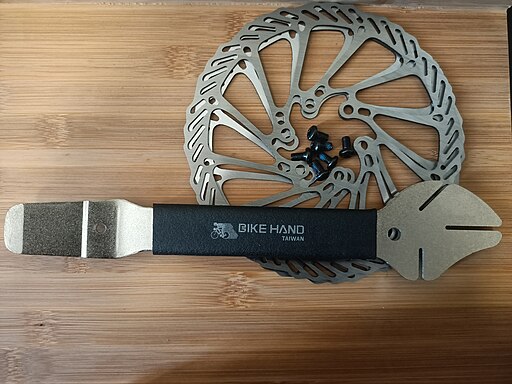
- Use a rotor truing tool (or an adjustable spanner wrapped in a cloth) to gently bend the rotor back into alignment.
- Make small adjustments—rotors are surprisingly soft.
3. Re‑Centre the Caliper
If the caliper isn’t perfectly aligned, the pads won’t contact the rotor evenly, leading to vibration and noise.
Quick alignment method
- Loosen the two caliper mounting bolts.
- Squeeze and hold the brake lever.
- While holding the lever, tighten the bolts again.
- Spin the wheel to check for rubbing.
This simple reset fixes most alignment‑related squeals.
4. Bed In Your Pads Properly
New pads (or freshly cleaned ones) need to be ‘bedded in’ which creates an even transfer layer on the rotor.
How to bed in pads
- Ride at moderate speed.
- Apply firm braking 10–20 times.
- Avoid coming to a complete stop during the process.
This builds consistent friction and dramatically reduces noise.
5. Check for Glazed Pads
If you’ve been dragging the brakes on long descents, the pads may ‘glaze’—creating a shiny, hardened surface that squeals.
Fix
- Remove pads.
- Lightly sand the surface until the glaze is gone.
- Clean with IPA and reinstall.
If glazing returns frequently, consider switching to sintered pads for better heat resistance.
6. Consider Pad Type
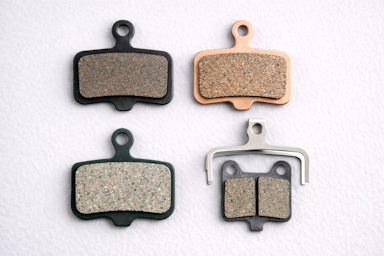
Different pad compounds behave differently:
| Pad Type | Pros | Cons |
|---|---|---|
| Resin/Organic | Quiet, strong initial bite | Wear faster, heat‑sensitive |
| Sintered/Metallic | Durable, great in wet | Louder, need proper bedding |
| Semi‑metallic | Good balance | Can still squeal if not bedded in |
If you ride in wet, gritty conditions, sintered pads may squeal more but perform better overall.
7. Tighten Loose Bolts
Vibration is a common culprit. Even if the braking surface is fine, loose hardware can amplify noise.
Check these bolts
- Rotor bolts
- Caliper bolts
- Brake lever clamp
- Axle/quick release
Use a torque wrench if you have one—over‑tightening can warp rotors.
8. Check Your Wheel Installation
This is a surprisingly common cause of mystery brake noise. A wheel that isn’t fully seated in the dropouts can misalign the rotor, thus causing the squeal.
Fix
- Loosen the axle or quick release.
- Reseat the wheel firmly.
- Retighten and spin to check alignment.
9. Wet Weather Check
Even perfectly set‑up brakes can squeal when wet. After a while, the noise should disappear as the rotor dries out. If it doesn’t, one of the other options, such as contamination or alignment, is likely the cause.
Final Thoughts on Squealing Disc Brakes
Disc brake squeal is frustrating, but almost always fixable with a bit of methodical checking. Start with cleaning and alignment, then work through the other steps. With a few minutes of care, your brakes can go from shrieking to silent, and subsequently, future rides will feel smoother and more enjoyable.
Your brakes are only a small part of your bicycle though. Don’t neglect the other areas shown in our pre-ride maintenance checks